Showing posts with label book covers. Show all posts

Thursday, April 3, 2014

Shelf Life (Modern Package Design 1920-1945, by Jerry Jankowski)

Good morning!

How's tricks? The wheels of progress roll on at my workplace-- we're in the midst of renovation, and walls are comin' a tumblin' down! As the shelving is disassembled in the third floor area where I'm stationed at the library, we worker bees have been shifting large ranges of books from old shelving to new shelving. The best part of physically moving these books is not the minor, Towanda-like endorphin rush one gets from slinging heavy hardbacks, but the thrill of finding hidden gold amongst Dewey decimal numbers you haven't necessarily looked over in an exhaustive manner. Example? I hardly ever (never) look at the marketing section (680's), excepting a few Mad Men/David Ogilvy type books...and if I hadn't been shifting books like Doing Business on the World Wide Web (Marni Patterson, copyright 1997), I would have never found THIS book, Shelf Life: Modern Package Design 1920-1945. What a keeper!


Published in 1992, author Jerry Jankowski opens his book on commercial packaging of the 1920's, '30's and '40's with a pre-history of the modern package design's lineage. The earliest example of "packaging" came from a German papermaker named Andreas Bernhart in the 1550's, who wrapped Bernhart reams in a distinctive shield pattern (you can see the label reproduced in this Google books entry on page 28). Various makers made their marks in the ensuing decades, but it was not until almost three centuries later, with the machine age's technological advances, that packaging really made its debut as a force in advertising. In the mid 19th century, chromolithography, "the printing from stones of up to twelve different colors by using dots and solid areas", and other improved printing techniques made mass-produced advertising and packaging possible. Jankowski comes down hard on the Victorian advertising world's penchant for "clutter and fussiness" in design--Grotesque and Egyptian font used indiscriminately with "curlicues, floral patterns and Greek fretting" led to a ongepotchket amalgamations of styles, against which the 1920's art deco school of sleek lines and minimalism could be seen as a direct revolt. Said Modernist designs came into vogue after WWI. While early examples still bore the mark of an Art Nouveau influence (romantic, feminine, floral scenes), by 1920, Cubist-inspired sparsity of design came center stage.

Speaking of Cubist design, that's what made me interested in the cover in the first place, this handsome little gent:

A mid 30's talcum powder bottle, the well heeled monsieur above and on the cover was made for The House of Men, Inc. His stopper-head is made of Vinylite, an early Bakelite plastic, and his broad trunk of glass. Can you imagine proudly setting this on your mister's chest of drawers in the thirties', pleased as punch to have something he can use and something that's cheekily whimsical to boot? I tried to look this up on Etsy and Ebay, but only this sold listing from August of last year popped up. Still! Good to know they're still out there, somewhere!!

The book divides itself into a curated look at these two decades of stylish packaging by type-of-product: 
  • Cosmetics and Grooming Products
  • Food and Beverage
  • Healthy Care Products
  • Cigarettes and Smoking Accessories
  • Automotive Care Products
  • Home and Office Products
  • Games, Puzzles, and Art Supplies
Something about the neat categorization of each of these collectibles appeals to my sense of order. In direct opposition of that, I've chosen my favorite cans and flasks and tins willy nilly from all over the book. Why not take a (disordered) look at what looked best to me? Excuse the glare in some of these photographs-- in some cases, the shiny pages got the better of me in trying to take snaps with my spy camera.


This heavily muscled, Brylcreamed haired George O'Brien type that graces the label of the Red Giant Oil tin on p 82 reminds me of Soviet propaganda posters, iconography that would also be heavily steeped in Art Deco simplicity. Look at him protectively hulking over your engine, promising to keep it not only safe from outside harm, but in good working order. There's an antique mall in Goodletsville, Rare Bird, that has a whole front counter of these deadstock type cans and packages, I want to go next time and see if any of these are represented on their shelves!


Who's been reading my dream journal?! I would LOVE to play "an elusive, fascinating game" with a pair of charismatic robots! The caption clues us in that the robots on the cover have less to do with the futuristic styling of the game (which is just a peg board with pegs to place, Chinese Checker style, in a strategic pattern that would outwit your human or robot counterpart) than the faddish love of sci-fi stylings. This box should have a caveat of "Robots not included" or "Bring your own robot opponent" (p 111).


The last time I got a package of nails for a picture hanging project, they DARN SURE didn't pack as much graphic punch in their plastic shell casings as this little Altoids-box like nail box from Dart. (p. 102). Have you thought about how Altoids tins (and maybe some other kinds of novelty mints) are the only packages that come in this kind of "you could use it for anything" packaging? I mean, technically, you can reuse your box of Tide powder detergent, but it's cardboard, and it's not much worth keeping...if you had five or six of these, you could use them for anything from pill box to an ID case to...the little tinker-junkman in my heart's heart is thinking up all kinds of uses for this box.


Probably my absolute favorite piece of marketing, excepting Mr. Talcum Powder, is this crazy, CRAZY can for "a French cereal product" called Diase. Notice that the bulky character in chiaroscuro there is guzzling from what looks like a gas pump. The French on the can reads "The best gasoline for the human motor". TOP THAT, AD EXECS OF TODAY. I am fascinated (p. 55).


I specifically left out examples of this can on the two page spread that described what was in the can, because it seemed like an unlikely candidate to me! These beautiful little tins, which look exactly like old compacts to me, are actually containers for.....((drum roll)).....typewriter ribbons! Would you believe? (p. 99) Seriously, these are way better than some of the face powder tins earlier in the book.


Between my fondness for the two little birds that chatter daily on the ledge just outside my workroom's large, Church-and-Seventh facing windows, and my life-changing discovery of the twitter feed @probirdrights (possibly the purest comedy gold I have ever read, with truly life affirming tweets like "I'm my own in charge" and "I think a good movie cinema would be me"), I had to include this pretty little bird on a tobacco tin. You tell 'em, bird! Give 'em heck! (p. 73).


I love the gold, mint green, black and white color scheme of this bath powder tin. I have two of my own sitting in the powder room at my house-- one Lanvin dusting powder package from a yard sale that looks like this, and one baby powder tin my friend Xingxia brought back from a trip to a relative's house in China sometime during high school ("This looked old, so I got it for you--my grandma made me buy her a new one," she laconically explained upon bringing it back...it's from the fifties' or sixties' and one of my best treasures!!). I would love to add this one to my collection...c'est si chic! (p. 21)


Last but not least, these tall talc powder bottles from the twenties (p. 22). Again, the black background with a colorful foreground is so elegant-- unlike my nondescript Cetaphil cleanser or the gummy toothpaste tube that I always try and hide in the closet before guests come over, I would have no problem displaying these bottles in a place of pride in the ladies' room.

So! I'm about to release this book back into the wild-- if any of you in Nashville are interested, it's here in your public library! :) Have you seen any great commercial packaging that really caught your eye in antique or junking adventures lately? Which of these packages would you most like to come across at the Goodwill for 99 cents? Read any good books about vintage or antique items lately? Let's talk!

That's all for today, but I will see you back here tomorrow with bells on for Photo Friday. Have a great Thursday! Til then.

Monday, March 31, 2014

Simon Doonan, Professional Window Dresser + Role Model

Good afternoon!

I got a TON of stuff at Goodwill this weekend, but danged if I didn't take any pictures of it for your viewing pleasure. I know, I know, slap my wrist...I'll try and snap some tonight and have a veritable Ali Baba's cave of treasures waiting for you to see tomorrow. In the meantime though, let me tell you about the book I read. I finished Asylum by Simon Doonan over the past weekend, and let me tell you-- a pleasure! Cover to cover, just a fun read. It doesn't take much more than the subject line of "fashion" and the image of a straightjacket on the front of a book to convince me to read it...but to keep me reading it, that was nurtured along by Doonan's colorful reminisces of a social and professional life mixed up in the arts, and specifically, clothes.

source
Simon Doonan begins the book with an essay on trading vocational notes with a friend in the mental health care business. Unsurprisingly, there are parallels between his work in the fashion industry and hers in psychiatric wards. Doonan mentions certain colors as being "on trend"; his friend remarks that "finding patterns where patterns don't exist" is a sign of schizophrenia. Doonan makes a reference to the Maysles' documentary Grey Gardens and Little Edie Beale's fabulous fashion sense (I am myself nuts about that movie); his friend watches it and lays into Doonan about the exploitative nature of filming these obviously troubled women, seeing nothing glamorous about wearing a sweater as a turban while living in a falling down house with thirty cats in the Hamptons. It does seem to be all in the eye of the beholder...and in this case, I definitely buy into the madness that's so so exciting for Doonan and his crowd. I've been reading so many books lately from the sociology and psychology section of our library that I assumed it was a book specifically about the areas where fashion overlap with mental illness (think of how many great examples of crazy, mad, bad, style mavens there are out there), but I was delighted to find that the book is mainly just a collection of short essays by Doonan about...just whatever this witty, fabulous man found interesting. I felt like I was listening to really good gossip told by a very interesting person for three hours, pretty much my ideal situation plus wine, vegan pizza, and Nina Simone music (all these conditions were met this weekend). Bravo, Mister Doonan, for making my Sunday afternoon more vibrant!

With husband, designer Jonathan Adler (not shown: their dog, Liberace...I DIE....)
source

I'm always almost a little embarrassingly interested in how so-and-so got to be such-and-such in these books about highly successful people in creative fields. How did Joni Mitchell get to be Joni Mitchell? What did Gene Tierney have to do to become Gene Tierney? As fun as the "super famous, hanging out with Warren Beatty" chapter of any memoir and biography is, I love the Horatio Alger portions of these books best in my heart of hearts. Because, dagnabbit, wouldn't yours truly love to find herself ensconced in a first class seat on a midnight flight to Madrid, sipping champagne, ignoring phone calls from a French beau, and thrilled down to her tasseled gold loafers to be there? TELL ME HOW, BOOK. I'm reconstructing this from what I remember reading, but I think Doonan writes of his near desperation, post-school job of selling clocks and suitcases in a department story in some dreary corner of the British Isles, before landing a job as a window dresser in London through a friend-of-a-friend. He did a bunch of fantastic, punk rock style windows, which drew the attention of a store owner visiting from California, which in turn lead to a gig dressing windows at Maxfield's in Los Angeles. While he spent time unsuccessfully screen printing and selling t-shirts out of the back of his car, eventually Doonan's career trajectory took him to Barney's in New York City, the world famous department store, where he spent the next twenty some odd years creating some of the more memorable displays the company has known. While this sounds very a to b to c in summation, there were probably plenty of times where SD was sitting around, gluing eyelashes to fake rats and thinking, "What am I doing?! Where am I going?" which is, of course, something that interests me tremendously.


A very interesting essay towards the end of the book (most of which you can read in an excerpt here) recaps this vocational path along with a side note about the controversy he created when he called supermodel Kate Moss, who, at the time, was launching her Topshop ready to wear line through Barney's, "a working-class slag from a crap town, just like me"...it was his misfortune to be quoted without the benefit of the "just like me" ending of that sentence. The sound byte was supposed to support his belief that some of the wildest, strongest senses of style come from people who come from unstylish backgrounds...like Kate's native Croydon and his own Reading. He talks, at length, about how many strong, creative types come out of the primordial ooze of otherwise nondescript, working class environments. Eventually, this marketing snafu is straightened out and Simon and Kate kiss and makeup, but he caps the essay with a thought about how, sitting next to interns at a fashion show, he realizes those glamorous lifesavers out of otherwise dull existences might not exist as much for us "commoners" anymore. From the essay:
In order to ascertain [the interns'] names, I peek at their place cards. Those surnames sound hauntingly familiar. They are boldface last names, the names of movie stars and Fortune 500 megamoguls.
“Are you by any chance related to X?” I ask one young lass who is wearing a $4,000 Alexander McQueen outfit.
“Yes. He’s my dad.”
“And are you the daughter of Y?” I ask another gal.
“Yes. But please don’t ask me to get you an autograph.”
As I survey these lucky-sperm-club members, my heart sinks.
If the kids of the famous start nabbing all the plum creative jobs, then what about all the marginalized freaks? What about all the outsiders, the kids of the unfamous, the working-class slags from bumf--k? What are they supposed to do? Who will offer them shelter? And, most important of all, what will be the effect on fashion?

Isn't that a downer? While I think talented people can come from any walk of life, I can't lie and say I don't feel a pang of unhappiness for the misfortune of fate that DIDN'T have me born as the progeny of a Swiss banking scion and former seventies' soap actress's happy union...because wouldn't I rather have had checked-out parents and a charge account with Bergdorf Goodman's than checked-out parents and five bucks on my person if I'm lucky during my formative years?  If I can't have the Alexander McQueen outfit, could I at least have as good a shot at a place at the table of the high and mighty as those who were already born there? He ends the chapter with a cheeky little open letter to fashion, pleading with it to "keep the door open to the self-invented superfreaks from the crap towns. This is the only way to keep fashion vital and creative", and don't you feel like getting up on a chair and applauding him.


So you could definitely say I found things to relate to in this kooky cultural gadabout's collection of essays-- and guess what? Mssr. Doonan has another five books for me to read sitting on my desk as we speak! Ah, the wonders of your public library system. Confessions of a Window Dresser, Nasty, Wacky Chicks, Gay Men Don't Get Fat, and Eccentric Glamour (the latter of which I tried to read a while back and never got enough into...second chance!) sounds like a welcome opportunity to wade in the water of his brashly outloud and above all STYLISH lifestyle. I'm looking forward to it.

What have you been reading lately? Seen anything in a book that particularly resonated with you? What do you look for in book covers and subject matters that really lure you in as a reader? Let's talk!

A video of my new best friend on decades of fashion here (do you remember him from I Love the Eighties' on VH-1?) :


That's all for today, but we'll talk again tomorrow with weekend finds all over the place. Have a great rest of your Monday evening! I will see you then. :)

Tuesday, October 22, 2013

Weekend Finds: Scary Books apalooza

Good morning!

Remember what I said about not buying as many books as I used to in order to conserve space? I work in a library, for goodness's sake, there is no reason I should bury myself in books I would have equal access to in my day to day trials and travails! Well, in the immortal words of Arnold Schwarzenegger in Commando: I LIIIIED. Here's me at the breakfast table today, where spread before me is not a morning's repast of flax cereal and coffee, but rather, an embarrassment of riches in the horror/ghost story book category:


I was at Great Escape in Madison last weekend, which you could see as being either fortuitously or in-fortuitously right around the corner from my folks' house, doing a bended-knee aisle walk under the comic books section, when what to my wondering eyes should appear but a selection of books that looked like they were plucked from my own subconscious wish list. While Matthew looks at vintage video gaming consoles and accessories on our too-frequent visits to this fine establishment, I like to pick up reprints of fifties' horror comics, the occasional movie-tie-in book, or old movie star magazine from the "other" category of things the record store carries. Sunday, there was an unusually high number of books that I love for unusually low prices! Let's take a look at my spoils:

1) Weird Tales anthologies:

Weird Tales was a pulp magazine that originally ran from 1926-1954, chilling and thrilling a generation of scare-obsessed kids who, in some cases, grew up to be writers-of-weird-tales themselves! Authors like Ray Bradbury, Harlan Ellison, Richard Matheson, all pioneers of sci-fi and speculative fiction, trace their early influences (and some of their early print appearances!) back to this magazine, which provided many young readers with their first exposure to fantasy greats like H.P. Lovecraft (see the Cthulu style creature on the cover of the book on the left). While Best of Weird Tales turned out to be an anthology of the magazine's late twentieth century reincarnation (might still be good! I'm holding out hope), Weird Tales, as edited by Marvin Kaye, has story selections from the beginning of the magazine's run to that revival period in the eighties'. I am looking forward to leafing through these ASAP.

Original, Vargas-y Weird Tales covers from the thirties' and forties'. How about that bat mask?


2) Celebrity tie-in collections:

I am a stone cold sucker for paperbacks...at fifty cents apiece, who could resist these covers, much less what is inside them? The companion record to the Karloff book is selling on ebay for $50.00....ugh! I hope I come across it in a Goodwill someday, as I did this copy of his Tales of Mystery and Imagination (estate sale, a dog's age ago, wasn't more than a dollar). He has the best voice for audiobooks...did you know he was the narrator for the original How the Grinch Stole Christmas tv special? It's true! The stories in the Karloff book are kind of lame (I think they were intended for a grade-school audience more than the grown-up spookies-seeker such as I), but the Rod Serling compilation on the right is pretty sharp!

3) Edward Gorey (!!!!)

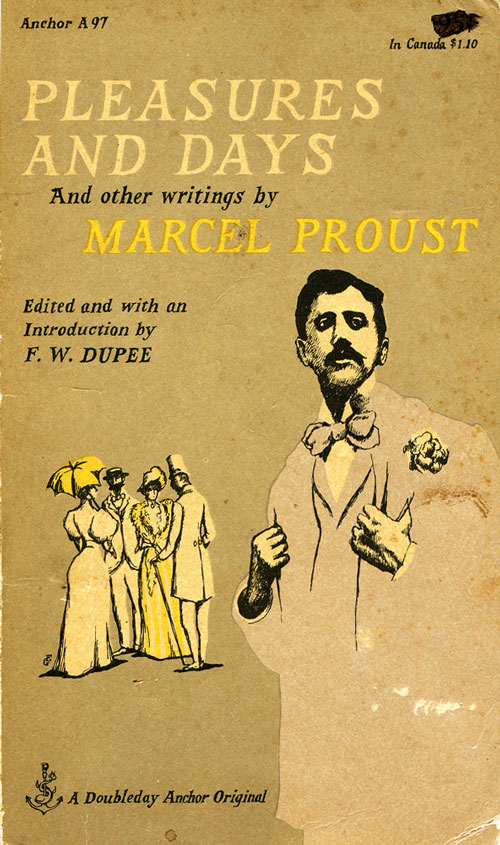
Since my devilishly precocious best friend Charley introduced me to Edward Gorey in eighth grade, I have been a huge fan of the illustrator/author's macabre collections. The first of his four Amphi-title omnibi, Amphigorey, on the right, is an anthology of fifteen smaller books. This includes The Gashlycrumb Tinies (a letter of the alphabet for each way in which an unfortunate child met its untimely demise) and The Doubtful Guest (with its iconic little creature in striped scarf and high tops). Dark humor, much? PITCH black in most cases. Still, there's something singular about the stories and the accompanying illustrations that make his work really in a class all of its own. Edward Gorey's The Haunted Looking Glass is a collection of famous (and infamous) short stories selected by EG punctuated with Gorey-penned tableaux to accompany the texts. This is not new territory for the author-- he worked for Doubleday in the fifties' and early sixties' illustrating paperback covers. Owing to my aforementioned weakness for the things, I probably have a dozen or so of these books with their weirdly lined, engaging little cover art (my favorite is hands down his drawing of French author Marcel Proust on the cover of Pleasures and Days...I wish I had a poster of it). I am in a state of high anticipation to see what he chose of other's work for his own spooky collection!

 4) Mysterious Marie Laveau: Voodoo Queen

A New Orleans local press publication, this slim volume recounts tales of Voodoo priestess Marie Laveau (who, incidentally, features prominently in this season of American Horror Story: Coven) and other strange happenings down on the Bayou. Since having visited Louisiana last year with Matthew and Rob, I have a special place in my heart for this weird, deeply historic region, and want to know more about voodoo legends in the U.S. (as opposed to The Serpent and the Rainbow's international look at ancient black arts).

 5) That which is not as it appears!


Ok, see how Gary Oldman in Coppola's Dracula, Jack Nicholson in The Shining, and no less than FREDDY KRUEGER grace the cover of The Armchair Horror Collection? Guess who are in no way associated whatsoever with the material between these covers? This collection is actually way better than any of the three promised cover-stars, in that it presents the original source short stories for classic tv supernatural and ghost story series like One Step Beyond, The Twilight Zone, and Tales of the Unexpected. I. LOVE. ANTHOLOGIES. LIKE. THIS. I haven't read a bad one yet and am halfway through its 700 pages! Authors include Roald Dahl, Cornell Woolrich, Robert Bloch, and H. Russell Wakefield, among others. Possibly the best thing out of all these finds.

6) Selection of occult/supernatural digests from the seventies':

Last but not least, I laid hands on these complete weirdies as they were stacked up on top of the discount comic books under the cds. Fate: True Stories of the Strange and Unknown is a digest style monthly publication (that is still around, maybe? Is this the same thing?), and you had me at the cover's troubling questions about the unseen world around us. "Winged Weirdies: Seen Any Lately?" and "What Happens Between Death and Rebirth?" are just two of the leads here. Inside, some 1972 reader has highlighted a bunch of classifieds at the end of the magazine, advertising everything from crystal balls and planchettes to a call for recruitment from a coven-master in New Jersey (tough gig). There's a whole feature called True Mystic Experiences in each issue which invites the reader to send in their true tales of brushes with the bizarre. The real life accounts are accompanied by the name and photograph of the person who experienced the event, which may well be the very best part. Fifty cents a piece! I couldn't pass these up.

So! What do you have on your reading list? Which of these titles do you think you would try and delve into first? Have any ghost story or horror collection recommendations as we skate ever closer towards Halloween? What did you find out in the world this weekend? Let's talk!

That's all for today, and if I don't scare myself silly tonight, I'll be back with more vintage goods tomorrow. Have a great Tuesday! Til then.

Tuesday, August 20, 2013

Ava Gardner: The Secret Conversations by Peter Evans (2013)

Good morning!

It's a banner day at She Was a Bird, blog followers-- I actually read, cover to cover, a high demand book in our library system within its due date! I feel so sad for all the little forlorn titles that languish the entire three week checkout period on the shelf next to my desk at work...all those missed opportunities. But maybe I'm turning over a new leaf: I checked out Ava Gardner: The Secret Conversations last week and read the whole thing in a day and a half...so intimate! So revealing! So other-adjectives-you-usually-use-to-describe-undergarments! 


Writer Peter Evans received the first of many late night phone calls from Ava Gardner in 1988, thereafter being contracted to ghost write her autobiography. The former journalist and biographer of Aristotle Onassis, Evans took copious hand written notes of both formal and informal interviews with the star publicists called at the height of her fame, "the world's most beautiful animal"... and does this kitten have claws, folks! While I was busy looking up literary references and cross-indexing sources-to-check-out-later from Orson Welles's dishy but at times esoteric conversations with Henry Jaglom, this book had me gulping up pages to hear more about the starlet's racy reminisces of husbands Mickey Rooney and Frank Sinatra, and her poignant younger days in the South, her family toeing the line between subsistence and almost-poverty. Born in Grabtown, North Carolina (a seasoned publicity man couldn't make a better name up for the girl's hometown, but it's real!), Ava was discovered when her sister Bappie's first husband displayed a large portrait of the seventeen year old in the front window of his photography business in New York. In spite of a thick Tarheel accent, she was signed to a seven-year starlet's contract (with the cancel-at-any-time option every six months-- the studio system did not mess around with dead weight!) in 1940 and took two cross-continental trains to seek her fortune at the gates of Metro-Goldwyn-Mayer.


What I loved about the book was the sense of self you got from the midnight hour transcript of Evans and Gardner's conversations. Peppered with serious profanity, punctuated with sorghum-sweet "honey" or "baby", interrupted by a call for more wine or whiskey, her conversations and the voice Peter Evans manages to convey has all the magic of table-tapping or a Ouija board-- this is as close as you're going to get to the "real thing" of Ava Gardner off set. Curled up in a grey track suit, her once perfect face paralyzed on one side by a recent stroke, the inner Ava is still intact, still feisty-- what amazes me is that beyond her perfect figure and that luminous beauty, there was a real firecracker of a girl, besides! Cussin' this, decrying that...she must have been a lot of fun when she was flying high.


Gardner got the jitters about being "laid bare" as Peter Evans had her in his initial chapter drafts for the memoir. Frank, funny, and sharp as a tack, she wanted him to "clean up some of the g-ddamn profanity", essential to her speech patterns, and take out some of the indiscreet pillow talk that made Evans's 2013 book so compelling. She ended up firing him and engaging a more pliable writer to produce what would be Ava: My Story, sadly published posthumously, and even more sadly, a bland account of a fascinating life. It was such a sticking point, throughout the Evans conversations, that she was writing the book to help keep her from the poor house. “I either write the book or sell the jewels, and I’m kinda sentimental about the jewels,” he quotes her as saying in the first chapter, and isn't that a line good enough for a movie!


There's been some controversy as to how much of the book is actually Gardner's voice, but the truth of it is, I'm only disappointed that one, there wasn't a companion cd of some of the actual microcassettes Evans's used during their sessions, à la Jacqueline Kennedy: Historic Conversations on Life with John F. Kennedy and two, Evans himself passed away, from a heart attack, before finishing the final chapter of the Conversations book. While the first half of the text is as strong and cinematic as the best Hollywood memoirs I've read, the second half seems to trail off a bit, into increasing paranoia and indecision on Gardner's part and more hemming and hawwing . At that point, a lot of the fun of sitting and gossiping with one of the screen's greatest "love goddesses" dissolves into the cat and mouse of "whether or not she'll let me publish the book" ( uh, spoiler alert: she doesn't, that's why we have this book). But all and all, I have to say I had a great time reading and feeling closer to the icon. When this book is good, it is very, very good.


So! Have you read any Hollywood memoirs that knocked your little socks off lately? Are you a fan of Gardner's? I've read the Ava memoir, and seen The Killers, Mogambo, The Barefoot Contessa (NOT the tv show, btw), Night of the Iguana, Pandora and the Flying Dutchman, One Touch of Venus, and The Sun Also Rises...but that was way back in the days of Nashville Public Library's VHS collection being just bursting with classic Hollywood titles. Now, if we have a copy on DVD, it seems like it's been checked out since 2005 and never returned! Booo. I'm going to have to see what I can see again between my own DVD collection and what's left of ours. Who's one of your "go-to" Hollywood screen queens? Let's talk!

I gotta get back to work!! Have a great Tuesday, and I'll see you back here tomorrow! Til then.

Thursday, July 18, 2013

Bookshelf Check

Good morning!

I've been reorganizing my desk at work, and thought I would mention some of the books that are going to get me through the end of these summer doldrums. Let's take a look! What should I read first?

1) Pop Culture:


  • I Wear the Black Hat by Chuck Klosterman-- It's funny with Klosterman's books, I read the essays, I enjoy the essays, I immediately forget the essays. Whether in book form or in one of his magazine publications, I can only seem to concretely remember a recent excerpt of this book on what he used to hate that he no longer hates (the Eagles, post-DLR Van Halen, etc, etc), which nudged me into ordering this book. Is this bad? I guess that would make going back and reading some of his earlier releases. With titles like Sex, Drugs, and Cocoa Puffs and Killing Yourself to Live, I am more apt to remember what the book is called than what is in it. 
  • My Lunches with Orson edited by Henry Jaglom-- I read about this one on Dangerous Minds and cracked up on Orson Welles's catty commentary on Hollywood celebrities. Katharine Hepburn on set boasting about sleeping with Howard Hughes? Check. The statement "I never could stand looking at Bette Davis"? Check. OW is taking no prisoners and taking you with him in these transcribed tapes from lunch conversations with director Henry Jaglom. Cannot WAIT to read this book.
  • Rita Moreno: A Memoir-- I heard an interview with Moreno on NPR a few months ago and have just now worked my way up through the holds list to have it checked out. Moreno was cute as button in her Sunday Morning interview, and I hope that spark and verve comes through as clearly in her memoir as it did in her radio spot. Update: Just read the chapter about her love affair with Brando and her suicide attempt in his apartment. I don't know where the rest of this books is going, but WOW, WOW.
  • Kicking and Dreaming by Ann and Nancy Wilson-- One of my very favorite records to put on, just sitting around the house, is the A-side of Dreamboat Annie, the scorching 1976 debut album of sisters Ann and Nancy Wilson in the band Heart. Do I ever get tired of hearing "Magic Man" and "Crazy on You" on repeat? I do not. I remember a lot of sturm and drang from their episode of Behind the Music (Ann's weight gain, post-fame, caused considerable waves in that "ethereal, thin, rock goddess" period of 70's music), so I'm interested in a backstage pass.

2) Cookbooks:


  • Vegan Eats World by Terry Hope Romero and Fresh from the Vegan Slow Cooker by Robin Robertson--I ordered these two books on the heels of the super disappointing The Everything Vegetarian Slow Cooker. While a couple of the recipes were ok, everything seemed bland, bland, bland! I'm intrigued by the idea of coming home to an already cooked hot meal, but not if it took six hours to cook something that tastes like it came out of a can. So phooey on y'all, Everything Vegetarian Slow Cooker. I'm hoping Fresh from the Vegan Slow Cooker and Vegan Eats World sufficiently spice up our dinner menus (or "denus", as I just attempted to type)!
  • Taste of the Caribbean by Jenni Fleetwood and Marisa Filpelli and A Taste of Cuba by Linette Green-- I am completely obsessed with Calypso Cafe after having dropped in to the East Nashville location on the way to work (which, is housed in a former Payless Shoes across from the middle school I attended... I just derive endless joy from how much the neighborhood has changed and in what ways) on Sunday and getting a black bean plate with three sides (corn and bean salad, sweet potatoes, and calalloo....YES, FOREVER, LET ME EAT THIS UNTIL THE END OF TIME) for $6.29. The only way I could do this more cheaply would be to make these items ahead at home, and while they might not turn out EXACTLY as flawless as Calypso's presentation, I thought it might be fun to try.

3) Various

  • Stylepedia by Steven Heller and Louise Fili-- This book came through for another patron to place on hold about two months ago, and I placed a hold on it out of curiosity. LOTS of gorgeous "style-spiration" from the pages within, I just need to settle down and really get a good look at it.
  • Lords of Salem by Rob Zombie-- I'm already halfway through this, and while it's written on a YA or so level (with R rated horror, of course), it's still pretty enjoyable. I'm not into Rob Zombie's music, but I'll have to do a post sometime about how I LO-O-OVE his movies. So much so, that I couldn't wait for Lords of Salem to come out on dvd after I foolishly missed it in the theaters, and am plowing through this not-quite-novelization.
  • Shocked: My Mother, Schiaparelli and Me by Patricia Volk Eartha Kitsch told me about this book, and I'm glad she did! It looks great-- the author's mother was the chic hostess at her family's even more chic restaurant in New York in the forties' and fifties', and from what I can tell, this is a kind of dual biography of the mother and one of my favorite fashion designers of all time, Elsa Schiaparelli (see previous blog post on the woman here). Can't wait!
So! That's the shelf, in all its glory. What are you guys reading or looking forward to reading this summer? Are you using your public library to the best of your abilities? You should! I got every single one of these books at our fair Nashville Public Library, which has recently raised the physical checkout limit to 100 items. ONE HUNDRED ITEMS. I could have another 89 books on that shelf! Which of these would you put on the top of your to-read list? Let's talk!!

That's all for today, but I'll see you back here tomorrow. Have a great Thursday, and I'll see you tomorrow for Photo Friday!

Tuesday, July 2, 2013

"Too Much of a Good Thing... is WONDERFUL!" (Behind the Candelabra: My Life with Liberace, 1988)

Good morning!

As we've taken to the road for two consecutive weekends on mini-vacations, I have to mention that I've had occasion to note the best parts about taking roadtrips with Matthew: 
  1. He never gets mad at me for insisting we visit the occasional Pocketknife Museum/antique mall/place where a famous playwright was born. Spoiler alert: I am ALWAYS insisting we visit the occasional Pocketknife Museum/antique mall/place where a famous playwright was born.
  2. He makes me laugh and gets us special coffee drinks, the better with which to bear the burden of long-term car captivity.
  3. He always does all the driving, sans complaint. I hate being in a car, much less driving, so this works in my favor on long trips.
  4. He lets me put whatever I want on the radio the WHOLE TIME. This could be anything from my marathon George and Tammy mix cd, to 1930's delta blues, to interminable audiobooks of my choosing.
As much as I love my family, I am the living veteran of dozens of family car trips that began, middle, and ended in circumstances fraught with tension, seat-kicking, and pregnant silences. I can't tell you how comforting it is to know that if we have to drive five hours south for a good time, I won't spend most of the five hours down there listening to a dramatic re-enactment of the old radio show The Bickersons, featuring me in a starring role.

Part four of my above list of praise figures into today's post, because it is all about the book we listened to on the way back from Atlanta, and finished on the way up to St. Louis. Folks, have you heard the good news about Liberace

What is with EITHER of these covers? Do you want me to not read the book, or what?

Now, you might be thinking "What red-blooded American male would spend 5 hours in the car listening to a book-on-CD of Liberace's teenage boyfriend's life with the most twinkling of Vegas stars?" LUCKILY, the one I'm getting married to in September!

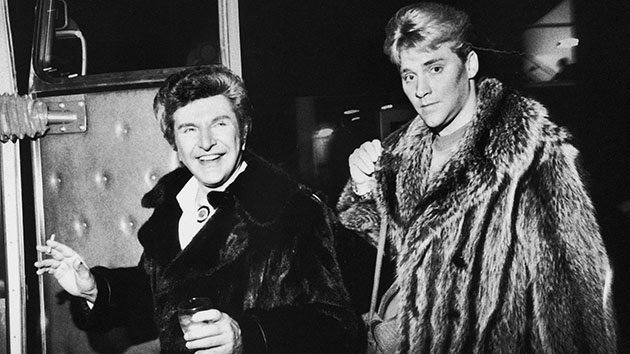
Scott Thorson's memoir, Behind the Candelabra: My Life with Liberace, is an OLD SCHOOL catty celebrity memoir. Claws are out, ladies and gentlemen. Claws are out. Thorson, who spent a rough childhood bounced around foster homes, met the still-in-the-closet-though-who-ever-thought-he-was-not-openly-gay Liberace in 1976, when he was all of sweet seventeen. The famed pianist was taken by Thorson's blonde, impish good looks and immediately hired him as a "personal assistant". Thorson appeared in that powder blue livery you see on the original publication's cover as Liberace's on-stage "chaffeur". Do you know about the part of the Liberace stage show where the Big L would show up in a Rolls Royce ON THE STAGE? They didn't call him "Mr. Showmanship" for nothing.

I am not kidding. See the video here, see around the three minute mark,
complete with Thorson introduction!
Their relationship lasted five years, during which Thorson enjoyed incredible wealth and luxury. Liberace was famous during his career for the over-the-top nature of his personal and professional lives...why have one piano when you can have twenty? If one chandelier is fabulous, then forty chandeliers are forty times as fabulous! Nothing succeeds like excess, as another gay icon once said. Besides the fact that they owned something like twenty dogs at one time (?!), I have to say probably the most shocking part of the book is Liberace's insistence that Thorson get plastic surgery to...get this...LOOK MORE LIKE LIBERACE. "I want us to look like family!" he says, at one point even dangling the possibility of formally adopting Scott. Now, in the early 80's, when gay marriage was still a distant dream, maybe it would make sense to adopt your much younger lover in order to make sure a legally binding bond existed between the two of you, to make sure your loved one was not left destitute at the time of your demise. AND YET. I am still given a case of the heebies thinking about a man forty years his troubled, confused boyfriend's senior, blurring the younger man's sense of identity with the promise of "belonging". It all just seems too weird. Also, why would you get surgery to look like Liberace?! No shade intended, but he's no Cary Grant!

Thorson post surgery. What is with that chin? That was one of the main things
Liberace wanted him to have, a chin implant! And for what? (source)


The lion's share of the text is the regular "oh I never thought I could get used to THIS style of living" memoir you get from someone who was intimately acquainted with a famous celebrity. The thing that always gets me about these books is how SIMILAR the story arc runs. Celebrity meets civilian, woos civilian, introduces civilian to a life of luxury heretofore undreamed of, celebrity becomes controlling of civilian, civilian doesn't have enough time/opportunities to pursue own interests, celebrity and/or civilian get involved in drugs, the two break up, years later, the civilian writes a book. Thorson picked up a nasty drug habit  a little before and definitely after the plastic surgery incident, where he was prescribed amphetamine cocktails to lose weight by Liberace's doctor, and just ran with it. The spin out that was precipitated by Thorson's increasing drug use, and Liberace's own infidelities, broke up the happy Thorson/Liberace home, but Scott wasn't going out without a bang. He initiated a groundbreaking, same-sex palimony case, the first of its kind, in 1982 against the entertainer, alleging that he had been promised salaries and long-term employment that abruptly ended when he and Liberace's relationship did. They settled out of court in 1986, and Liberace died the following spring. Sad, sad, sad.

Doesn't he look kind of like a lamp here? (source)

Reading this book through the lens of 2013, it's interesting to think of how deeply Liberace's fame dipped after his death. While he was consistently one of the highest paid and beloved floor acts of all time, making money hand over fist on packed venues and lucrative souvenir contracts, before this movie came into production, I just barely knew anything about him. He spent a lifetime creating, nurturing, and maintaining an image that, once he was gone, began immediately to fade into obscurity. His museum, once visited by tourists in droves in the early eighties', closed in 2010 due to low attendance. Isn't that strange? I think it's the specific burden of the stage performer-- had he been in the movies, there would still be footage to back up his iconic status, but the record releases and videotapes of his show are a paltry second-best to what I've heard of the "magic" he could create during one of his live performances. Even Thorson admits of his former lover that the man could make a room light up, and have each of the seats in his sold out shows feel like the front row at an intimate, command performance. I feel sorry for Liberace that his legacy, in 2013, depends on a dramatization of what must have been one of the most painfully public invasions of his closely guarded private life.

source

That said, I'm extremely interested to see the HBO movie based on the book. In the hands of director Steven Soderbergh, I'm sure some of those identity issues will come to light, along with a more sensitive reading of the whole story than perhaps Thorson's own account allows for. 

So! What have you been reading lately? Have you seen the Liberace movie yet? Any thoughts on the glittering lifestyle of one of the world's most famous 20th century entertainers? Let's talk!

Gotta skedaddle, but I'll see you back here tomorrow (hopefully with some pictures of the stuff I bought last weekend)! Til then.


Wednesday, March 27, 2013

Both of Us (Ryan O'Neal, 2012)

Good morning!

And oh, Lord, Lord, do I have a doozy of a book recommendation for all you viewers out there in Blogland today.

Wait! Let me explain!

Preface: Now, usually, I don't drink to quite the excess I ended up drinking on Saturday night, but some time early, early Sunday morning, I woke up in one of those drunken torments that is COMPLETE AND UTTER INSOMNIA.I was sleepless! Sleepless as I have ever been! Have you ever done that? You wake up, hours after having fallen asleep in a state of extreme inebriation, and realize you have never been so completely awake in your life? Not even hungover, just awake in some cave bat like nocturnal state. Well, there I was, and Matthew just sleeping like a baby with his sweet little cherubic face turned up to me, looking like an advertisement for Serta and restful repose. I sock-footed it out of bed, drank a glass of water, drank another glass of water, popped some Advil, and hoped that sleep would take merciful hold of me. No dice. So I went for my iPod, and the only book-on-audio I hadn't listened to yet was Both of Us: My Life with Farrah, by Ryan O'Neal.

source
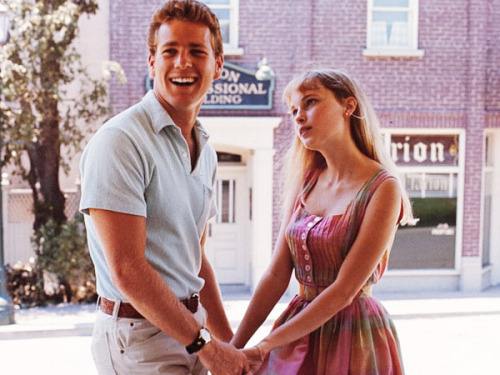
Ryan O'Neal, in case the name doesn't immediately ring a bell, was a moderately successful leading man in the sixties' and seventies'. I was familiar with him from his work with director Peter Bogdanovich, which includes What's Up, Doc?, Nickelodeon, and the most perfect, perfect, perfect Depression-era movie not actually made in the Depression, Paper Moon. He was in Kubrick's Barry Lyndon. He's handsome in a high school basketball star from the time period kind of way...all reddish blonde hair and boyishly toothy grins, and there's something about his voice and look that reminds me of George Segal or early Robert Redford. He initially shot to fame in the tv version of Peyton Place (with gorgeous Mia Farrow, both before and after her groundbreaking Vidal Sassoon hair cut) and 1970's six-hankie-weeper Love Story (with gorgeous Ali MacGraw). (Confession: I HATED that movie the one time I saw it. Loved the clothes, hated the idea of it. "Love means never having to say you're sorry" is one of the dumbest, most nonsensical things I've ever heard in my life...I hate to think of people using that in earnest, EVER, when they honest to God should just accept the person's apology and move on! But I digress. Great clothes.)

See what I'm saying about the clothes? You could wear this NOW. Right now. And not look a jot out of place. source
I'd read daughter Tatum O'Neal's biography, A Paper Life, a few years back when it came out, so I had a pretty good idea that things between the precocious, troubled actress and her father were not all peachy keen. Then I remembered that not that long ago, she'd done an interview where she said their fences were mended and she'd actually given him the Oscar she'd won for the movie they made together. Then I read that the book was actually supposed to be about his relationship with Farrah Fawcett, so maybe it would be new material altogether from the book I'd already finished.

source
Folks, this book is crazy. CRAZY. Imagine poor me tangled up in the bedclothes, listening almost against my will to this at-times searingly self-confessional, at-times chatty, at-times strangely tangential narrative, read by O'Neal himself, about everything in the living world. Troubles with his first wife Joanna Moore, who in her youth looked like a prettier Joanne Woodward, and battled alcohol and barbiturate addiction. Troubles with Tatum, with whom fences are apparently UNMENDED, as he speaks on several accounts of how vicious and unstable and hurtful her behavior has been to him throughout her life. Though the book is subtitled "My Life With Farrah", there's none of the attention given in other memoirs of celebrity love affairs (God knows I've read them all) to the actual relationship. I mean, he talks about it, but mainly in "what I should have done", "what she should have done", "can you believe this is what happened" type ways. I don't know if it's the grieving process or what the deal is, but the end product is decidedly bizarre. I would actually tack the breakdown is 45% about Ryan O'Neal, alone; 35% Ryan O'Neal's reaction to things Tatum or his other children have done "to spite him"; and a paltry 20% actually about Farrah Fawcett.

What do I have to do to get hair like that? What?
I was like, maybe I'm crazy! Maybe I'm not listening to/reading this correctly due to the duress of being awake at 2 in the morning for no reason! But a Jezebel article, in reaction to a piece of FF that appeared in Vanity Fair after her death from cancer in 2009, bears out my theory here, running under the byline "Vanity Fair’s Farrah Profile Essentially A Ryan O’Neal Tell-All". Ok, good. I am correct.

For a preview of what this six-hour rollercoaster of an audiobook is like, here are some 2011 chat show appearances by Ryan O'Neal, both with and without daughter Tatum. Imagine the book is like this, but with no one else talking, just Ryan O'Neal. Ah, the oratorical fireworks.


Am I ghoulish to be as interested in this trainwreck of personal-lives-meeting-public-spotlight as I am? Have you seen any of these before? What's your take on the whole airing-private-disagreements-in-public? Wouldn't you rather just remember Ryan O'Neal as the adorable teen heartthrob from the photos at the top of this post? How do we break this to him?

If you've read any flat out crazy celebrity memoirs lately, you know I'm on the hunt for a new one, and there's a high bar to meet after this one!

That's all for today, I'll see you kids back here tomorrow. Til then!

Wednesday, January 30, 2013

One and Only: The Untold Story of "On the Road" (2011)

Good morning!


Monday night, I downloaded the audiobook version of One and Only: The Untold Story of On the Road, by Gerald Nicosia and Anne Marie Santos, just to fill out my mostly-read iPod audiobook playlist-- by yesterday afternoon, I had finished the recording, and what a fun ride. It's been years since I thought about my hip-deep, high school obsession with the Beat Generation, and picking up this book on a whim brought memories of daydreams I had almost ten years ago, all open highways and crowded Manhattan rent parties and typewriters clacking on into the night. Guys! If you like the beats, and if you like first-person memoirs of people's lives in the forties' and fifties', I am confident that you will like this book.

Luanne is "Mary Lou" to Jack Kerouac's "Sal Paradise" and Neal Cassady's immortal "Dean Moriarity", present for a great deal of the go, go, goings that make up most of On the Road, so isn't it just a TREASURE and a TREAT to listen to her recollections of those days for seven hours? I thought so. While nothing earth-shattering is revealed that I can remember, I just loved hearing more about what these icons of fifties' literature were like in actual, breathing, every day life. And how, even in 1978, a lot of mythology was already beginning to pop up around their life stories that may or may not line up with the reality.

Additionally, how ridiculously doll-like are these photos of Luanne and Neal? They're like movie stars:


One of the more appealing factors of One and Only is the Rashomon like perspective shift from what I've already read about two of the beat movements most famous members, Kerouac and Neal Cassady. Carolyn Cassady, ermine blonde second wife to Neal who also had a long-going affair with Jack, wrote a book about her life with both men called Heart Beat in 1976, which you'd better believe I gobbled up in the midst of my beat fervor back in the day. I think I must have read it five times in one summer, taking notes in a composition book about what other books and publications to cross reference later. If only I'd had this book then! In terms of comparison, One and Only is at a disadvantage, in that it is basically a (beautifully edited and annotated) transcript of several conversations Kerouac biographer Gerald Nicosia had with Luanne Henderson in 1978. However! Oh, to hear a romantic rival dismiss and re-contextualize some of the events from Carolyn Cassady's book, and affirm her own importance in the whole idea of the real life cast of On the Road. Luanne says more than twice that she feels she's been represented at best as a ditz and at worst as trailing after Neal Cassady long after he had lost interest in her, when that is, based on her own recollections and the facts of some of Cassady and Kerouac's movements, just not the case. I've got to read Heart Beat again, now, for the millionth time, to check back on some of the stuff in this book.


What I loved most about Luanne's book was just the going of it. From what I can remember, Carolyn's book had a lot about how she and Neal, and sometimes Kerouac, would set up housekeeping here, the men would all be drinking beer and smoking pot and hanging out and writing, and then Neal would do something nuts, like take all their savings, buy a new car, and headed West for a few weeks. Luanne would be one of the people he would pick up to take on these mad dash trips across America, so her perspective was actually from the passenger's seat of On the Road, rather than once they men had come home to roost. I love how she talks about the time period without that sense of importance or myth-making that lots of biographies and memoirs of beats and beat-hangers-on...they were just a bunch of crazy kids trying to have fun and live their lives. I think a lot of the feeling of being "on the road" is present in her book; while it seems to be happening elsewhere in other sources from the time. Does that make sense?

The Signet cover of On the Road and one of Kerouac's early sketches, circa 1952, for what he wanted the cover to look like (source)
Were you ever a huge "Beat" fan? Ever get super-really-into Burroughs, Ginsberg, or Kerouac? Have you taken a cross-country road trip of epic proportions, the likes of which someone should write about some day? Do tell!

Have you seen Jack Kerouac speak French before? You have now! French-Canadian, but still.


That's all for today! See you tomorrow.

Further reading:

LinkWithin

Related Posts Plugin for WordPress, Blogger...