Wednesday, March 3, 2010

Shopping for the Stars

It started out so innocently with that Robert Montgomery paper doll I was going to post...then I just went ebay/image search crazy. I couldn't help myself. I want all 1930's celebrity endorsement products. All of 'em.

These dolls are just terrifying. And somehow fantastic. I searched and searched and searched for more of them, but I only found these, on three different sites no less. What else was in that book? Robert Montgomery, Norma Shearer, and La Crawford were all MGM stars from the early 30's, I suspect there's a Gable or a Harlow out there.

Bette Davis paper dolls from the 40's with SCREEN WORN COSTUMES as designs, jeez louise.


'Scary Cary" Grant cigarette trading card, and a 1941 Cary Grant paper doll, also with screen worn costumes (see the link for another set of outfits).


1973 movie star mesh purses. Good. GOD. Very rare because of a copyright scare and subsequent recall. See you at an estate sale, little buddy. PLEASE see you at an estate sale.


1930-’40s vintage Hollywood movie star sewing patterns (Barbara Stanwyck, right; Olivia de Havilland, left). Who thought of this? WHO THOUGHT OF THIS? Why didn't I know about them earlier?Also, I love that the sizing on these two in particular reflect the women that would have bought the dresses, not the stars. O d H and Ms. Stanwyck could be like size fours, but you could make your own copy of their dresses, with regulation patterns, in a size 16. I wonder what they looked like as a finished product.


**********************


Sidenote: I also found the PBS Antiques Roadshow archives to be both informative, and sad-making.

Antiques Roadshow Rage Part 1 (in which autographed photo of Spencer Tracy and Jean Harlow is displayed, also, handdrawn pictures made for a sound man by Shirley Temple age like 6. I am going to stop watching this show if people keep finding things like this at rummage sales and I don't start doing the same)

Antiques Roadshow Rage Part 2 (in which 60 years worth of movie posters are brought in. Was I switched at birth? Why wasn't I born into a family of career movie people?)

Antiques Roadshow Rage Part 3 (in which autographed F Scott Fitz book with adorable flyleaf signature and note is brought. The man-who-brought-it-in's grandmother asked for his autograph in a bar, FSF gave it to her; the next day she brought another book in, where she found F Scott at the same bar. She told him that due to his drunkenosity, the first inscription was completely illegible, so she would need him to re sign another book. The moxie on that girl. Inscription? "For Lorainne Pell. In substitution for the drunken hieroglyphics of last Thursday night or last Wednesday night or was it last Tuesday night? From yours faithfully, F. Scott Fitzgerald." Moral? That woman's grandson had better watch himself on the way to the parking lot).


End transmission.

Monday, March 1, 2010

Two by Two --Horror Double Features


Sick as a dog all this week and last...which means plenty of time to not go see Shutter Island (which you would know to be a real privation if you had any idea how much I want to see Shutter Island) and instead trundle up undercover and fabricate my own list of Horror Film two'fers. Two by two, they came, this queue of near perfect mid 70s to mid 80s scare fests. I don't know how horror movies became my comfort movies, but for some reason, being curled up under a mild dosage of Nyquil with a truly scary movie is my idea of a get well plan.

Voila....regardez bien:


1) Shock Waves/Invasion of the Body Snatchers (1977, 1978; Ken Wiederhorn, Philip Kaufman)-- Amphibious Nazi zombies rise from their watery graves to torment Brooke Adams and crew. AMPHIBIOUS. NAZI. ZOMBIES. Pulling this off as scary rather than camp was an exercise in plot control and pacing, which I think Wiederhorn did relatively well. Such great shots of the zombies rising out of the water...reminded me a little of the balletic underwater scene in Fulci's Zombie. Wiederhorn also made Eyes of a Stranger, which had a promising slasher beginning, but kind of runs itself into early 80s horror movie torpor midway through. Kaufman's Invasion of the Body Snatchers has pod people tormenting Brooke Adams and Donald Sutherland. This is actually my favorite iteration of Jack Finney's cold war classic...yes, I've seen the original. Yes, it still plays like a bad episode of One Step Beyond. What's so smooth about the 1978 remake is how close to reality it feels...like John Carpenter's The Thing, this version seems to trump the original in using the bones, the key elements of what made it so scary, and taking away all the unneccessary, stagey bits. Each remake stands on its own, and in my opinion, fares better for its director's superior vision. Carpenter might not be a better director than Hawks, but for that film, I think he was. Ditto for Invasion. Last scene....just too scary. Just...too...scary.


2) Who Could Kill a Child?/ See No Evil (1976, 1971; Narciso Ibáñez Serrador, Richard Fleisher) In the former, a man and his pregnant wife (who looks exactly like Mia Farrow, but is not) arrive on an obscure Spanish island for a rustic holiday, only to find the place bereft of adults. Strangely, the children remain... If you kicked up Village of the Damned by about six notches, you'd get Who Could Kill a Child? I was interested to see something else by this director, who was very articulate on his ideas for the film in one of the dvd extras, but Netflix drew up blank (tsk tsk tsk). In the latter, a blind girl (who looks exactly like Mia Farrow, and is) assumes the absence of moving and talking family members means they've taken off for the weekend and continues about her daily routine, oblivious to their murders, the presence of their dead bodies, and the fact that the murderer is still in the house. For the pure suspense of waiting until she figures out what exactly has happened, the first twenty minutes of this movie are edge-of-the-seat.


3) The Changeling/ The Fury (1980, 1978; Peter Medak, Brian de Palma)-- Two movies in which late middle aged, early 60s A-list stars play down to the horror genre by pretending they're making an action movie. In The Changeling, concert pianist George C. Scott (Patton) walks away from a car accident that claims his wife and child to morosely bang out a new composition in a ridiculously cheap, well appointed, but (surprise) haunted house. As if he didn't have enough to deal with, George C. rolls up his sleeves and tries to bellow out reason with the child ghost who keeps appearing in bathtubs and carrying on in the attic at all hours of the night. The plot has one of those great, story behind the story reveals, but remembering Scott just screaming at the ghost every time the phantom appears, without the mildest regard for the fact that he's dealing with the supernatural, really made this movie for me. It WORKS somehow. I guess I might be more concerned with the nuisance of poltergeist activity in my obscenely-lowly-rented house, too, if I were half the man GCS is. Great backstory on the screenwriter's inspiration here.
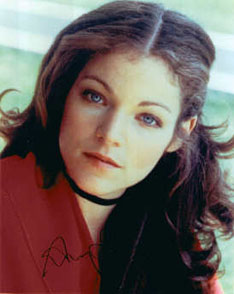
In The Fury, Kirk Douglas's (Sparatacus) son is presumed dead in some weird terrorist attack in the opening sequence of the film. When it turns out the CIA or FBI or some government entity has in fact whisked him away to a training compound for highly psychically gifted youth (to be used in some kind of future tactical manoeuvers, very hush hush, etc), Kirk Douglas is really, really....MAD, I think the word is. He's crashing cars, beating up punks, swinging out of apartment windows, getting his girlfriend killed-- it's kind of neat, actually, to see someone his age doing some of the stunts he undertakes and not TOTALLY stretching the limits of suspension of disbelief (see: Clint Eastwood in Blood Work). Amy Irving (here) looks eerily like Gene Tierney (here) throughout this movie.


4) Sisters/Black Christmas (1973, 1974; Brian de Palma, Bob Clark) In Sisters, Margot Kidder plays a pair of Quebecois twins (one good, one psychotically bad) in what I consider de Palma's only really successful Hitchcock homage... where Dressed to Kill and B d P's later films poorly ape Hitchcock's style to the point of ham fisted visual quotation, Sisters plays like an updated Hitch. Margot Kidder, with her cut glass cheekbones and flawless French Canadian accent, is fantastic in this. The next year, she made Black Christmas with Olivia Hussey (who, like Amy Irving, also has a 40's doppelganger, in the form of Merle Oberon...there was a great classical Hollywood biopic somebody could have made on which the boat has now sailed...).
Black Christmas surprised me in its starkness. Clark, whose later credits include Porky's (I and II), Rhinestone, and A Christmas Story somehow managed to make a seriously disturbing slasher with an old school "Omg I didn't even see that coming but at least they'll be some kind of let up? No? Unmitigatingly dark? Ok, fine..." ending. Kidder is the highlight of the movie, in spite of Olivia Hussey's starrish role, with her foul mouth and scotch and soda laugh. It's hard to believe the only time she made headlines after this was for the Superman franchise (good news) and being found, after being missing for several days, hysterically hallucinating in someone's backyard (bad news). You never can tell with these high strung Hollywood types, I guess. PS THE REMAKE WAS SO AWFUL. I know you're required to say that of any late 90s/00s remake of some 70s masterpiece, but whatever is said for other goes thricely for this one (and Texas Chainsaw. Let's not go there). Sledgehammer job. Other than the Driller Killer remake (which my beloved Tobe Hooper, of all people, committed), just the worst horror remake of an obscure-ish horror film.


I might do a part two of this later in the week....for now though, it's back to my screening bed.

Friday, February 12, 2010

KVP

While sorting through the box of recipes I mentioned in the post about the electric organ and the creepy house, I found this packet of samples from KVP. The lady of the house requested samples and order forms from the Kalamazoo Vegetable Parchment company, makers of shelf liners, pie crust papers, fancy wax papers to wrap sandwiches in...all kinds of goodies, really. Here is a letter from them, with the woman's name and address blanked out:


How nice of them, how considerate! Plus, note the date: 1944. Which would explain this added card (right). When you use Dusting Paper, you're using Dusting Paper with Hitler.

These shelf liners come in nine shades! All bright and clean looking. I think it's weird how today's contact paper, for the most part, is so dull (the one's left to me in my kitchen cabinets are this weird, faux woodgrain, which is funny, seeing as the cabinets themselves are wood, and it's easy to see how "faux" the woodgrain really is).


Now for my favorite part, the wax paper. Wax paper for your kid's lunch pail! For tray liners at a birthday party! I've always thought of wax paper as being tin foils boring older brother, but no more!


I keep thinking what a great anything pattern these things would make. Curtains. Wallpaper. A dress. Or best of all, a combination of the three, wherein you would blend in with your surroundings. A vintage chameleon. Isn't the fish one the best?

Wikipedia says:

"The Kalamazoo Vegetable Parchment Company was founded in 1909. The founder, Jacob Kindleberger set up shop along the Kalamazoo River. The company then started selling pieces of land, located around the mill, to the mill workers. By 1930, the population had grown to 511 and Parchment officially became a village. Parchment became a city in 1939, and has become known as "The Paper City". Over the years KVP was bought out by or merged with other companies including, Sutherland Paper Company, Brown Company, James River, and finally Crown-Vantage. 2000 marked the end of the paper making era in Parchment and the city has struggled to keep itself afloat. Now the great debate in the city is what to do with the old paper mill land."

How neat to live in a town named "Parchment".


This site has a little more on the company history, plus a tiny photo of a what looks like a whole roll of the zoo/cowboy wax paper, gimme gimme gimme.

Flickr set on KVP factory, a now-abandoned building.

Friday, February 5, 2010

"Home is Fun"


I found this book in the basement of an estate sale-- the room was relatively clean, but the book itself looked like it might have come out of the cave in The Hills Have Eyes. EVERY PAGE is ripped-- every one! How does a kid (or kids) even do that? I was always taught to treat books like a carton of eggs.

Formerly a holding of the Dickson (Tenn) Public Library, this book was published in 1939 and is kind of a Home Training Manual for primary school students (it's labeled "social studies", but again, is more "cultural indoctrination"). I didn't think about it until after I'd read the whole thing, but in Depression years, these kind of books, the movies, and the Sears and Roebuck catalog might be the only places a lot of people would see what a "normal" family and household looks like. Let's take a look at the illustrations I scanned (the ones that weren't exed out in lead pencil by some errant schoolchild seventy years ago). Handtinted photographs of REAL PEOPLE. Does it get neater than that?


"These are the people in your neighborhood, in your neighborhood...." Note the color of the awnings.


Marbley backsplash, red venetian curtains, red step stool. Roddy, the boy on the left, has the gaudiest socks in every picture, I love them. As to Ann, the girl on the right-- why were little girl's dresses so short back then? Seems wrong.


Look at that beautiful avacado green tile! I love how some of these still photos look like art prints. The composition of the second one is nice.


I'm pretty sure those curtains are yellow clipper ships on a forest green background. Want. This is the room for all three kids. ["This room looks like a garden in summer," said Ann.]


Mother and Father's room. ["Mother will powder her face here," said Ann. "Father will brush his hair in front of the looking glass," said Roddy.] Note the way the curtains are hung, and the fact that each room has chenille rugs with matching bedspreads, on hardwood floor. From old movies I just assumed all houses were carpeted. News to me.


The Living Room. ["Why is this room so big?" said Ann. Because we will use it the most, " said Mother.] Blue carpet, chocolate brown furniture. I realize that due to a black and white education, I also have little to no idea what colors things were in people's houses in the late 30's.


Bring that chair to my house! BRING IT TO MY HOUSE!


The company room ["Now it is time to do the company room," said Mother. "We want our friends to visit us. We need a nice room for them."] I thought it was nutty that the house had three bedrooms and shook down like this: one room for Mother and Father, one room for all THREE kids, and one room for "company".


["How clean the clothes look!" said Ann. "See them dance in the wind!" "They dance because they are glad to be clean," said Mother. The clothes danced and jumped on the line.] Isn't that just beautiful?

And last, but not least, PINTO, the real star of the book:


["It's your turn now, Pinto," said Roddy. He put Pinto on the swing. "But Pinto jumped off. "No thank you," he barked. "I like the ground better"]


I'm ready to move in, how about you? Home IS fun.

Thursday, February 4, 2010

"Wappie's Surprise Cake"


I picked up a copy of Volume 4 of the Childcraft books set today at Goodwill, entitled "Animal Friends and Adventures". This copy is from 1954, which is about ten years older than the set sitting on my grandmother's bookshelves right now. Wracked with the guilt of one who frequently buys things that have no future use, I thought I would share my thoughts on a little guy named Wappie. But first, preamble.

It seems strange to me that the Childscraft people, who I know are like high quality purveyors of children's reference books, would choose such terrible illustrators for this edition, but most of the animals look bizarre. Examine:


That lion looks insane. It's like a teddy bear with hell eyes. I kept flipping through the book seeing illustrations of owls in women's wear, and children getting into mischief, until I came across this:


Ladies and gentlemen, Wappie, of "Wappie's Surprise Cake", by Harriet Bunn. This story was originally published in a periodical called Child Life, but that's about as far as I could get as to the provenance. Mostly concerning the most endearing little bab of a monkey of all time, and a misadventure surrounding a coconut cake and the destruction of said coconut cake. Some of the writing was just sparkling, though-- by far the best in the book.

Choice quotes/synopsis:

1) Wappy: re: being inside because of the snow and being ignored because of Christmas: "The week before Christmas he was so lonesome that if he'd known how he would have cried." --->?!?

2)Wappy: re: coconut baking scent pervading household: "'Coconut' and the tall palms with their rustling leaves seemed to rustle close to his ear...such pictures it brought him! He could see his brothers rolling the [coconuts] along the ground and knocking them together. When they cracked [them]apart, they flung back their heads to drain the sweet milk." ---> reminds me of that "The 'Teddy' Bears" short film from the Library of Congress dvd set, which melds the Teddy Roosevelt story with the "Three Little Bears" fairy tale for a decidedly macabre ending ("Oh, great President, thank you for responding to our home invasion by murdering both my parents and taking me into captivity.") This one's kind of like "Gee, guys, thanks for baking me a coconut cake. It reminds me of my home in Africa. WHERE I WAS HAPPY. WITH MY FAMILY. RIGHT. I FORGOT."

3)On being confused by the smell of the cake: "Could he, Wappie, who had smelled lions and snakes miles away, be mistaken about such a well known smell as that?" ---> the pride of this little monkey, his superior sense of smell. Cute. My boyfriend repeated it to me in a Clifton Webb voice and it was even funnier (Mr. Belvedere in this clip).


4)On being caught actually sitting on the cake, an event for which he is WHOLLY CULPABLE: "Wappie lost his temper as fast as he did everything else...if she [the cook, who is reasonably upset by this little demon] wanted that cake she could have it, and right in the eye, too. Wappie stood up and aimed the hunk in his fist. He spit the bite in his mouth onto the floor. He dug his long toes into the frosting and scuffed it out behind him..." Give 'em hell, Wappie. Little man, I suggest Clint Eastwood for your biopic.

5)He swings on the lamp back and forth and launches himself to safety via the open kitchen door. See remark #5.

6) He gets really cold outside in a snow covered tree up which he has clambered and is lured back in by his owner and a banana. None of us are without faults. "The warmth of the coat soothed him. Wappie snuggled close to Peggy's neck and laid a tired head against her shoulder." My little heart.

7)Wappie sees a Christmas tree for the first time, and thinks about how good the fruit on it must be (ie ornaments). He sees the star at the top, and we get this passage. " 'A star!' He had tried to reach stars through the green palms of the jungle, but they were always too high for him. Tonight he was satisfied. His stomach was full of cake, but the very next chance he got he was going to taste that star." He keeps thinking in his very active dream life of home. And touching stars. I am misting like the Niagara Falls.

8) Just to bring the point home, as Peggy reflects on how much Wappie likes the tree, and what a good monkey he is, he internally reiterates his plans for that tree: " 'Tomorrow,' thought Wappie. 'While they take their naps, I'll wriggle through the door and climb up and taste that star!' "

End story. [APPLAUSE, WAPPIE FOR LIFE, ETC, ETC]

I love how irrepressible the monkey is throughout the story. He really is a strong little character, and without trying to read too much into him (he's not exactly Jay Gatsby), there's plenty for the kid or the parent reading it to them to attach themselves to Wappie, he has moxie. The sweetheart sweetieness of the how cheeky he is just wins me over completely.

What I love about the Childcraft books are how they were written _for_ children-- the writers don't write down to children (instead assuming they or the people who read to them to be of average intelligence, not lobotomy patients), and the writers don't write up to their parents (as it seems every smarmy CGI animated thing that comes out nowadays is, riddled with body humor gags sandwiched in between classic tv references).

Couldn't find ANYTHING to link me to more Wappie-age, but here are some links to the Child Craft set. I wouldn't pay twenty bones a volume for them, but if you see them peeking out of somebody's attic, or a yard sale box, don't pass 'em up, they're treasureful.

Childcraft 1949-1961

A really kind of interesting blog
that reviews children's texts from a current perspective. Why do I never think of anything first?

Friday, January 8, 2010

Queen Christina (1933)


I've always been anxious to watch Queen Christina. It really makes no sense that I was delighted to find it on VHS about three years ago, and yet somehow left it there on my shelf unseen, a permanent "still to be seen" lister, until this morning. Maybe it was the stigma early costume pieces have with me (I've been burned so many times on MGM costume spectacles that just turned out wooden as a plank and bo-o-o-oring, despite lavish sets and stars like there are in the night sky). When I almost bought a copy of it on DVD this weekend, I decided it was time to watch the VHS.


John Gilbert was a love at first sight for me. One of the most popular of late silent actors, Gilbert's profile in Jeanine Basinger's seminal Silent Stars, not to mention smoldering pictures of the actor therein, piqued my interest. Handsome as the devil, big flashing eyes, smart little moustache, and white hot love scenes with real-life paramour Greta Garbo, WHAT IS NOT TO LIKE. Flesh and the Devil had a particular love scene, the still of which is reprinted again and again in cinema texts, which I'll post here:


You think this looks saucy in still motion? See the movie. Nineteen twenty-six! In a tight closeup, I can't think of anything closer to what real romantic kissing looks like. Maybe the scene with Cary Grant and Ingrid Bergman in Notorious. But this one is just electric.

That said, you'd need to know that, in spite of the fact that Garbo seemed to primarily interested in women/Svengali Mauritz Stiller/privacy/herself, she and Gilbert had what was, to Gilbert at least, a very real love affair, culminating in Gilbert left standing at the altar. Her talking movie career, beginning with Anna Christie (1930), went off like a shot. "Garbo Talks" (with a heavy Swedish accent) turned out to be a great thing, as the icy good looks matched up well with the husky, accented voice. His movie career, however, floundered with the advent of sound pictures, the reason behind this having several possible causations, the most popular reporting of which was his thin voice.

Which brings us to what I most looked forward to in Queen Christina-- John Gilbert's speaking voice. Many silent stars did not, it turns out, sound like they were supposed to (by which I mean, to us moviegoers) when talking pictures became the thing in the late twenties and early thirties. Clara Bow, case in point, spoke in a thick Brooklynese(*), which seemed a direct contradiction to her spritely, Kewpie doll looks. Chaplin's voice was sonorous enough, but God he talked too much in subsequent sound pictures. The tramp character had never needed sound to create pathos (**).

And Gilbert was supposed to have a tiny little tenor voice.


Some sources I've read thought studio head Louis Mayer tinkered with the timbre on the soundtrack of Gilbert's first sound picture, His Glorious Night, in response to a grudge Mayer harbored against Gilbert (I can't remember...I think something about a drunk Gilbert at a party saying all women were whores, then Mayer saying what about his mother, then Gilbert saying his own mother was whore, and Mayer flipping his lid because it was about the most sacrilegious thing he'd ever heard, etc, etc. Studio execs can be weird). I found a clip of the film here which seems to only support another theory I've heard that the quality of John Gilbert's voice itself was not the problem, but merely the lines he was required to say. "I lo-o-o-ve you, re-e-eally." If the inflection in those lines is over the top, please watch any sound movie that came out between 1929 and 1932, say. I'm not naming names, but ye Gods, who among them all was reading a line with any kind of naturalistic style?

So I sat down to watch Queen Christina with all these things in mind, and I need to say now that I was completely bowled over. The story was strong, Garbo, in spite of a weird pageboy I'm sure had something to do with historical accuracy, looked as good as ever, and then John Gilbert. He was just as beautiful, just as magnetic, as in any of his silent pictures I've seen. To mention Clara Bow again, both she and Gilbert have these large, dark eyes that flash like exclamation points. I've never seen another actor's eyes quite touch that flash-- as if there was a special relationship between the film camera and the breathing person in front of it. I was pointing out to my boyfriend that in spite of the fact that Antonio (John Gilbert's character) bears a striking resemblance to Magnus (John Gilbert's character's rival), both tall, good looking, dark hair and eyes, it was easy to tell Gilbert because he was the one who looked like a star.


The movie was a great "royalty chooses between love and country" story-- I usually don't go for those (it's frustrating to keep shouting "CHOOSE LOVE! CHOOSE LOVE! DAMMIT, I HATE THESE MOVIES, WHY IS SHE CHOOSING HER COUNTRY OVER LOVE?!" for the duration of a two hour film), but this one had me glued to it. Garbo was perfect-- sometimes I find, in spite of her great personal beauty, a little histrionic, but it was well under control for the most part. I was happy to see them together again. Slightly disappointing ending, it felt rushed, but the last scene of Garbo's face as she sails out of the Swedish harbor is justly memorable.

From what I understand, this was a role that Garbo more or less gave to Gilbert. His star had been on the wane for three or four years (an entire lifetime in studio system Hollywood) as hers continued to climb-- she demanded that he be chosen for the role over several bigger names. His daughter's biography, one of the better books about early Hollywood and from an upclose look, as the author had her own mother as a source, relates a continual slide into alcoholism and obscurity, interspersed with a brief marriage to Virginia Bruce and an affair with Marlene Dietrich, until his death of a heart attack in 1936, only three years after Queen Christina was released.

And yet! Watch his solid acting in this film and enjoy one of the truly great silent stars in an unimpeachably good talking performance. I might just have to go in for the DVD.


John Gilbert at imdb
John Gilbert at Golden Silents
Technicolor (!!!) speaking (!!!) clip with Norma Shearer (!!!!!!) (I need to figure out what this is all about)
A little (weirdly narrated) documentary about Gilbert and Garbo with lots of clips


* accent barely contained in this clip from her last film in 1933.

** see the last scene of City Lights. Bring many, many handkerchiefs.

LinkWithin

Related Posts Plugin for WordPress, Blogger...